Engineering Brand Consistency for Performance Marketing
How I partnered with designers and marketers to unify 13,200+ assets across 10 marketing channels
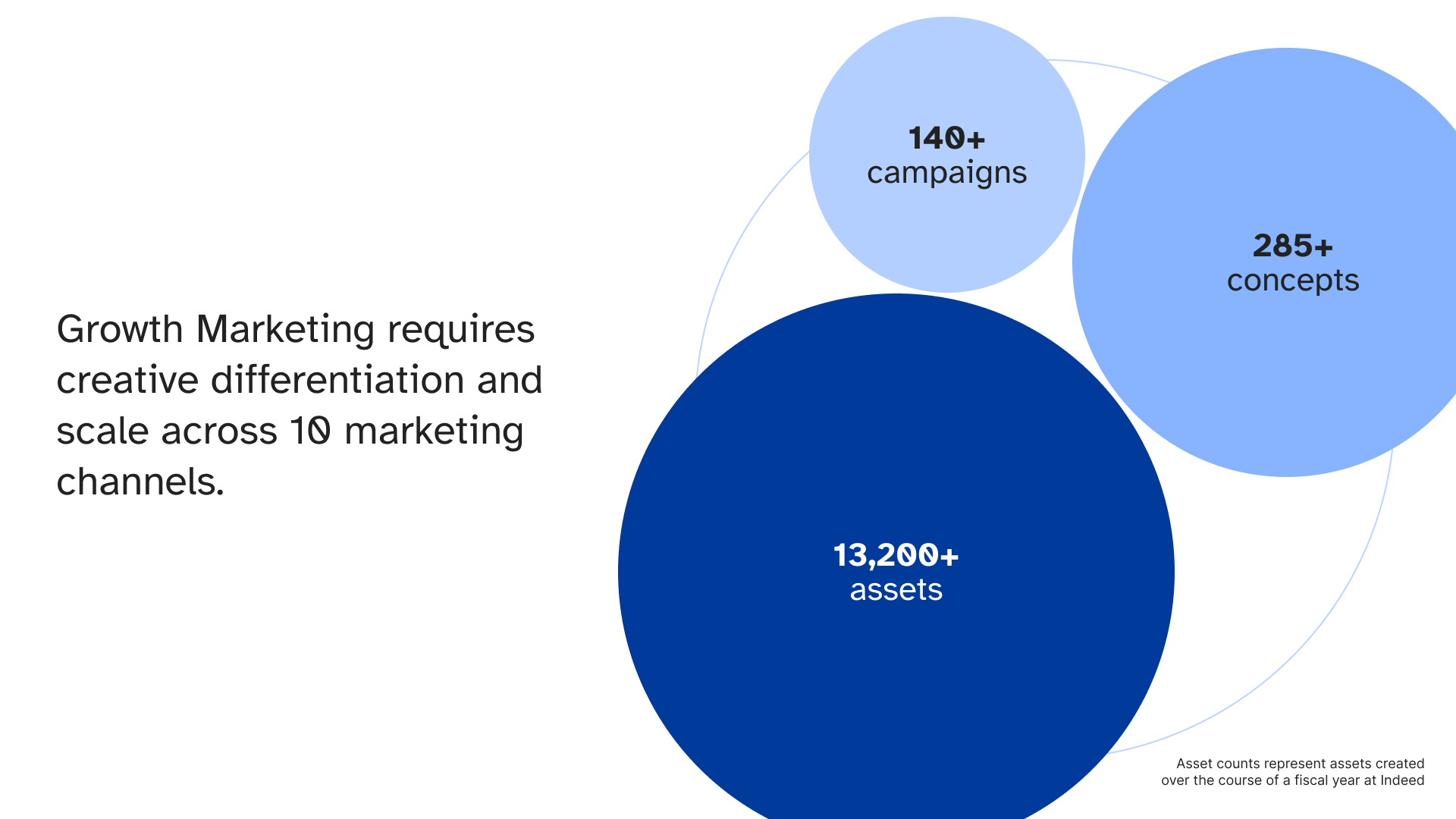
Growth Marketing at Indeed operates at massive scale: 140+ campaigns, 285+ concepts, and 13,200+ assets across 10 marketing channels. Without a unified creative framework, performance marketing ads lacked brand cohesion, creating a fragmented user experience that undermined brand recognition and potentially increased customer acquisition costs.
As Creative Technologist at Indeed, I partnered with designers, copywriters, and marketing managers to build a comprehensive design system that brings brand consistency to performance marketing while supporting the creative variation algorithms demand.
The Challenge
With over 13,000 assets distributed across paid social and display channels, maintaining brand consistency while optimizing for performance seemed nearly impossible. Performance marketing thrives on creative differentiation—algorithms reward fresh variations—but without guardrails, this leads to brand dilution.
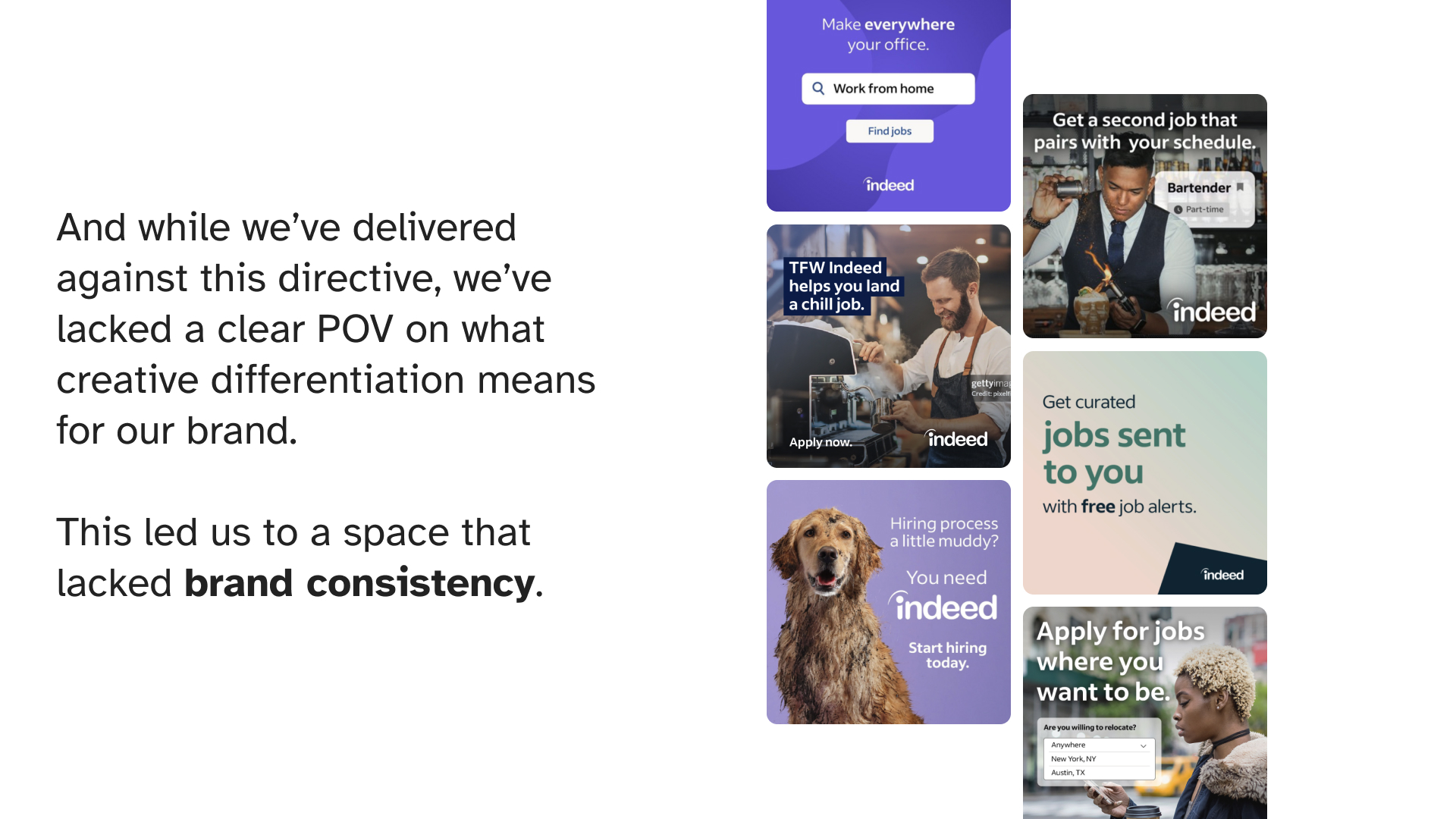
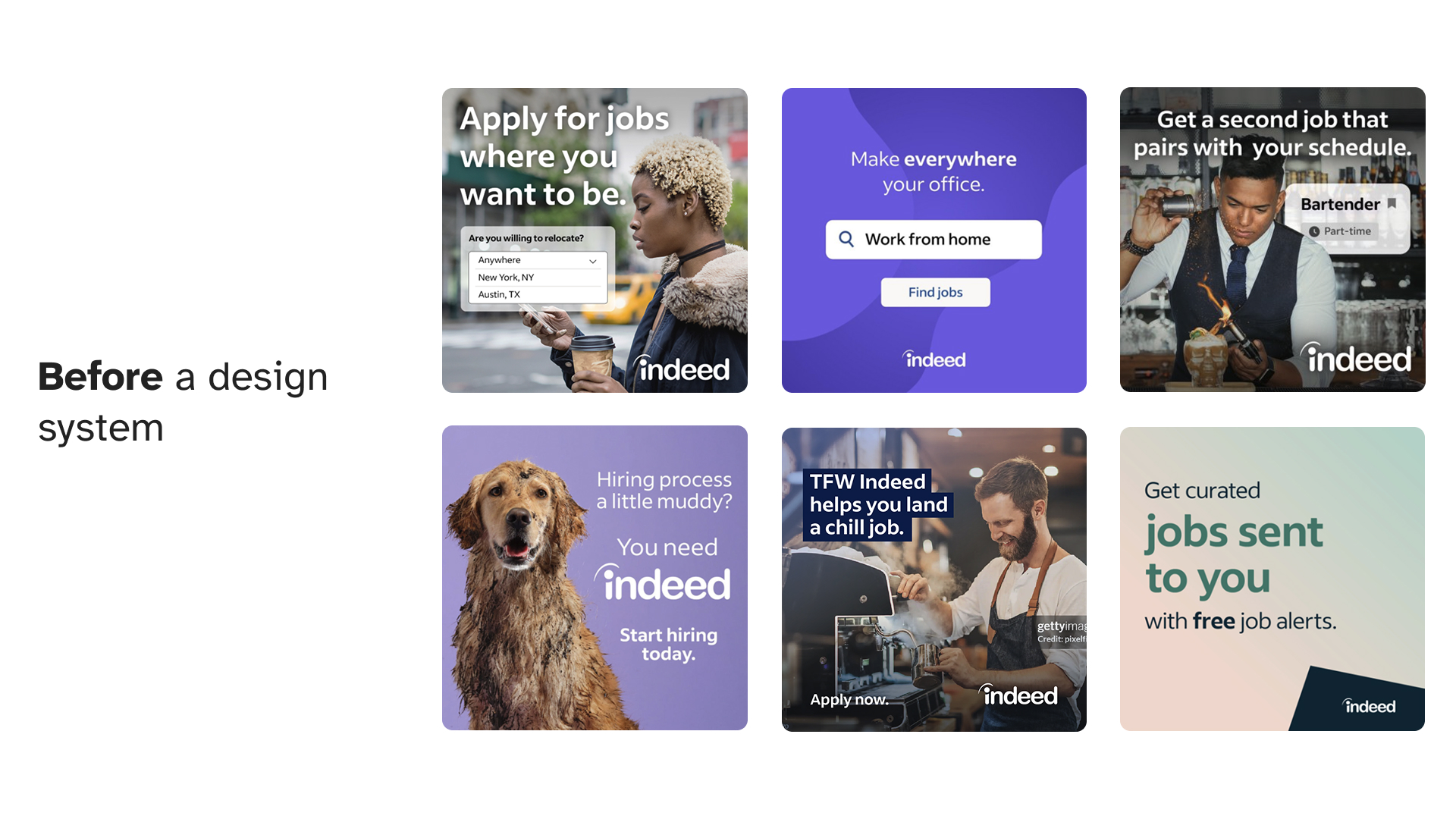
The existing creative production process lacked structure. Designers at multiple agencies had varying interpretations of Indeed's brand guidelines—the same guidelines used for everything from TV commercials to sales presentations. Without a focused subset of these guidelines for growth marketing, ads looked disconnected from each other and took too long to produce.
The Approach
We took a brand approach to performance marketing, with three core goals: ensure ads are not just on-brand but recognized as uniquely Indeed, support performance marketing's focus on creative differentiation, and enable production at scale to lower cost per apply and download.
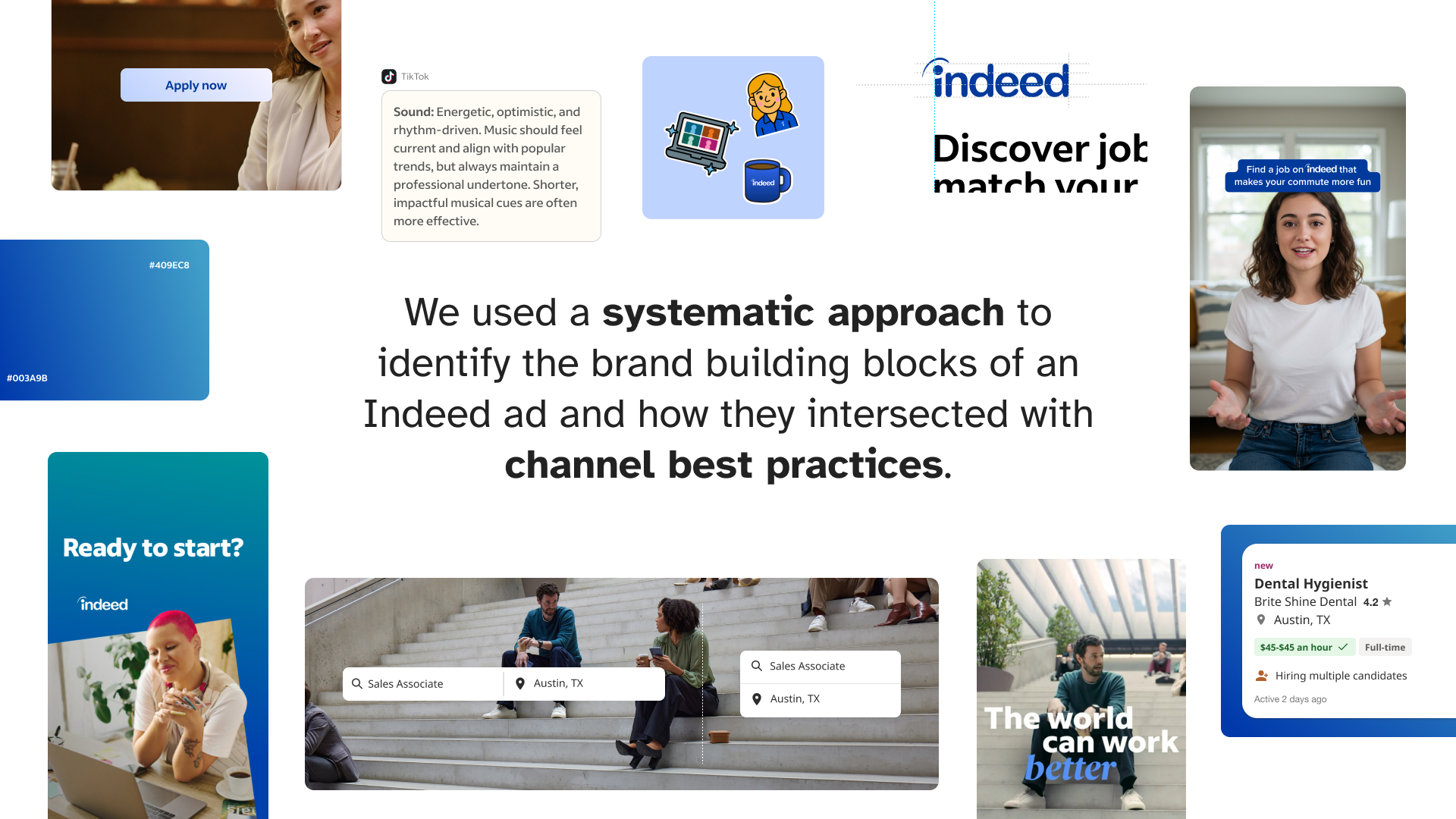
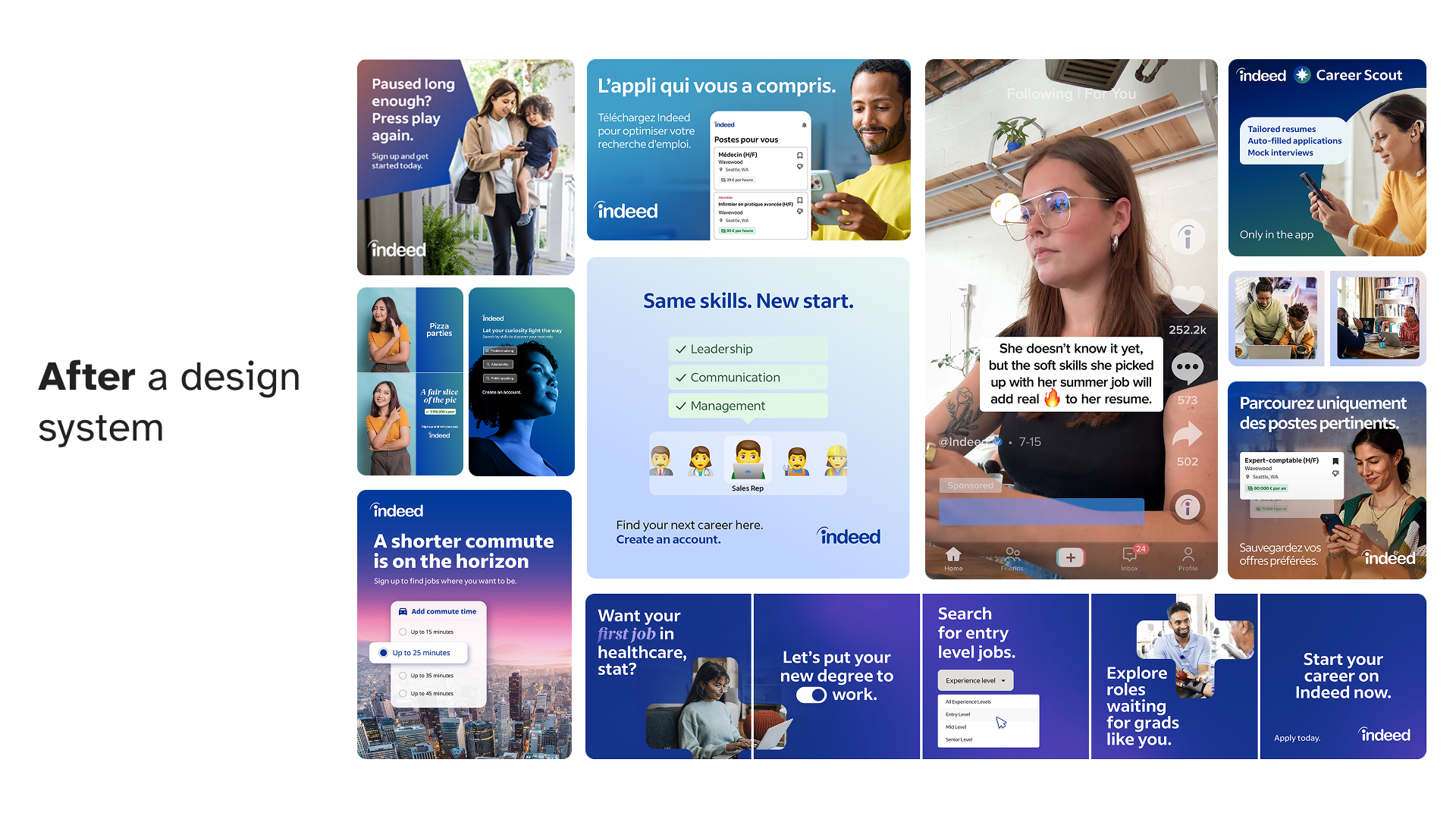
Rather than creating rigid templates that would stifle the creative variation performance marketing requires, we developed a systematic approach built on identifying brand building blocks and channel-specific best practices. This framework would give designers the flexibility to create fresh variations while maintaining unmistakable Indeed DNA across all touchpoints.
The System
The solution was a living, breathing design system in Figma—a comprehensive creative playbook that teams could explore, share, and collaborate within. The system codifies Indeed's visual language for growth marketing: typography scales, color palettes, illustration styles, photography treatments, layout principles, and component libraries optimized for each channel.
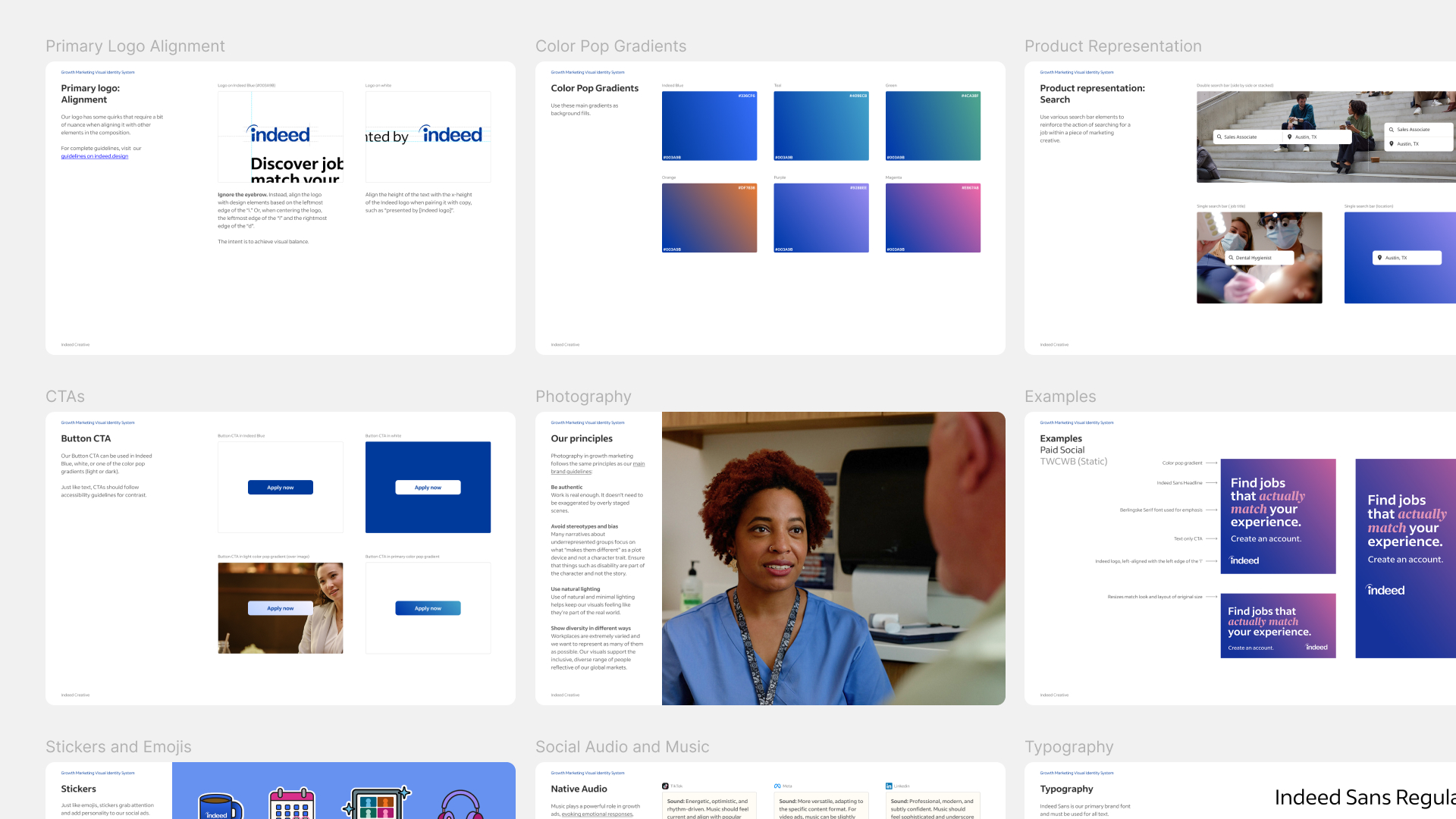
By housing everything in Figma, we created a single source of truth that's accessible to designers, marketers, and stakeholders. The system doesn't just document standards—it provides practical tools and components that accelerate production. Designers can quickly spin up new concepts knowing they're working within guardrails that ensure brand consistency while still having room for creative exploration.
The Transformation
The impact of the design system is immediately visible when comparing before and after states. What was once a scattered collection of disconnected creative executions transformed into a cohesive visual ecosystem that's unmistakably Indeed—while still providing the variation and freshness that performance marketing algorithms reward.
The Impact
Beyond visual consistency, the design system fundamentally changed how Indeed approaches growth marketing creative. The framework enables faster iteration, reduces revision cycles, and empowers designers to make confident decisions aligned with brand strategy. New team members onboard more quickly, and cross-functional collaboration improves when everyone works from the same creative playbook.
Looking forward, we're expanding the tech stack to automate common tasks, save money, and operate even more efficiently. The design system serves as the foundation for scaling creative production through automation while maintaining the quality and consistency that builds lasting brand value.
This project demonstrated that performance marketing and brand building aren't opposing forces—with the right framework, they reinforce each other. Creative differentiation at scale doesn't require sacrificing brand identity. It requires a system thoughtful enough to embrace both.